

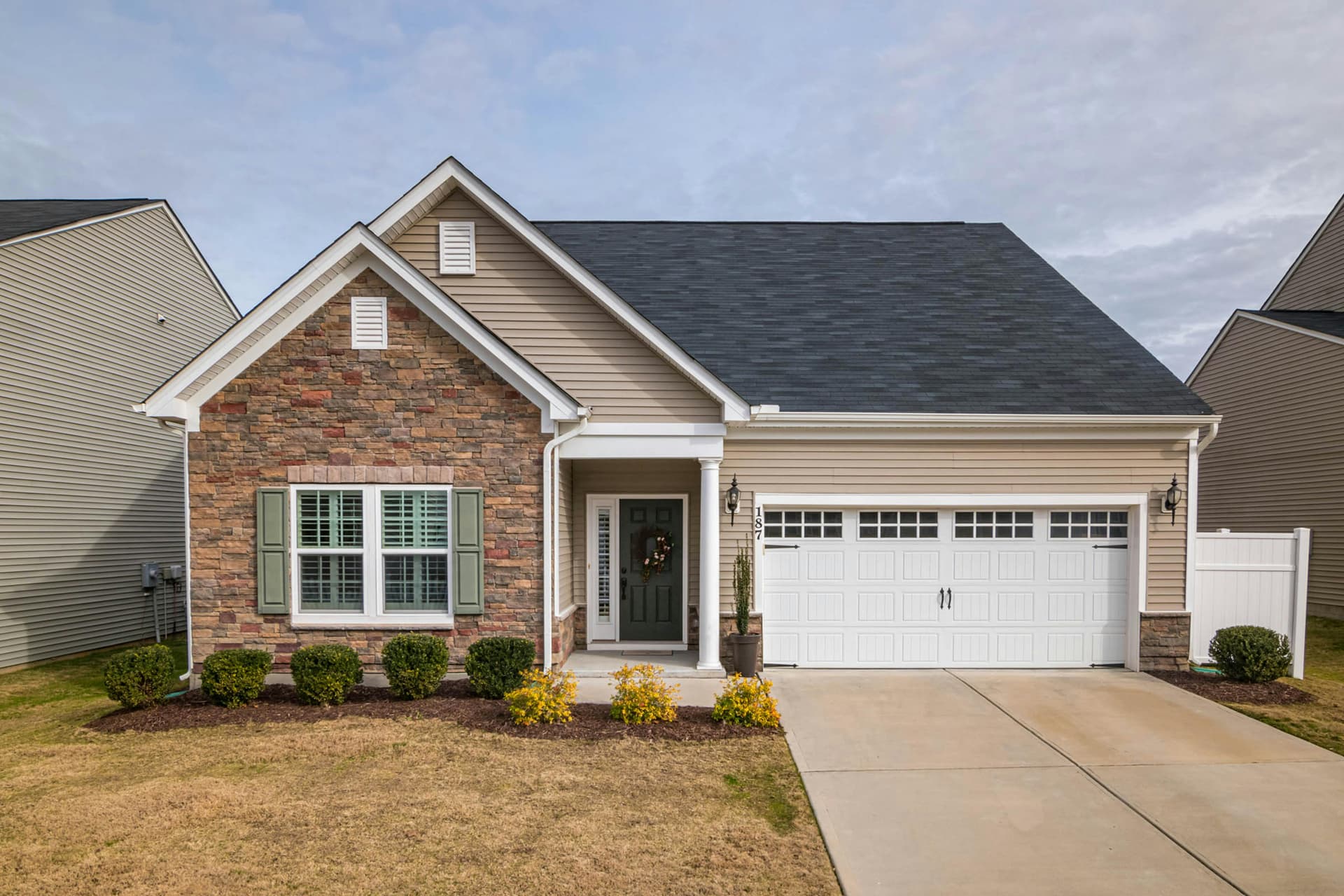


When a borrower who got a 6.5% rate on their home purchase asks why their commercial property loan is quoted at 7.5–9%, the answer isn't "the lender is being greedy." There are structural reasons why commercial rates are higher than residential rates, and understanding them helps you evaluate whether a quoted rate is reasonable.
Why Commercial Rates Are Higher
Commercial real estate loans carry more risk to the lender than residential mortgages in several ways.
First, there's no government backstop. Residential conforming loans are sold to Fannie Mae or Freddie Mac, which provides liquidity and an implicit government guarantee. Commercial loans are portfolio loans held by banks, credit unions, life insurance companies, CMBS trusts, or private debt funds, each with their own return requirements and no government floor.
Second, commercial properties depend on business performance. A vacant office building doesn't generate income, and a tenant who closes their business can't pay rent. Residential properties always have potential for owner-occupancy as a fallback; commercial properties don't.
Third, commercial loans typically have shorter amortization and balloon payments. Most residential mortgages are 30-year amortizing. Commercial loans commonly amortize over 25–30 years but have a 5, 7, or 10-year balloon, meaning the balance comes due and must be refinanced. That refinance risk is priced in.
The Rate Components: Index + Spread
Commercial loan rates are typically quoted as a spread over an index. Common indices include the 5-year or 10-year Treasury yield, SOFR, or the Prime Rate.
A lender might quote "5-year Treasury + 250 basis points." If the 5-year Treasury is at 4.5%, the rate is 7.0%. The spread (250 bps in this example) reflects the lender's risk assessment, their cost of funds, and market competition for the deal.
Compare this to residential rates, which are primarily tied to 30-year MBS pricing and 10-year Treasury yields with very thin credit spreads for conforming loans.
How Deal Type Affects Rate
Not all commercial loans price the same. Stabilized multifamily, particularly in stronger markets, typically receives the most favorable commercial rates because it has the most predictable cash flow. Industrial properties have been similarly well-priced in recent years due to demand.
Retail and office carry higher spreads due to perceived risk. Bridge loans are significantly higher than permanent loans because of their short-term nature and often-transitional property status. SBA loans carry fixed rates set by the SBA's guidelines, which can be competitive with or better than conventional commercial rates for owner-occupied properties.
Construction and Renovation Loans
Ground-up construction and major renovation loans are the highest-rate category because the lender is lending against a property that doesn't yet produce income. The risk is real, projects run over budget, get delayed, or don't lease as projected. Rate premiums of 1–3% over stabilized permanent loans are common.
What Constitutes a Competitive Rate?
Rate ranges shift with the macroeconomic environment, but commercial loan rates historically run 1–3% above comparable residential rates. Within commercial lending, the spread between the most and least favorable deals can be significant, a DSCR above 1.40 and a credit score above 750 might get you 0.5–1.0% below a borderline DSCR 1.10 deal with a 680 credit score.
Shopping multiple lenders matters significantly for commercial deals. Unlike residential conforming loans where rates converge around a market consensus, commercial pricing has much more dispersion across lenders.
Common Mistake: Comparing a Commercial Quote to Your Residential Rate
These are different products priced off different indices with different risk structures. Comparing your 6.5% residential rate to a commercial quote of 8.0% and concluding the lender is overpriced may not be accurate. The right comparison is commercial loan vs. other commercial loan quotes, ideally from 3–5 lenders for the same deal.
Bottom Line
Commercial rates are higher than residential rates because the risk profile is different, no government backing, income-dependent collateral, balloon risk, and portfolio pricing rather than secondary market execution. Within commercial lending, rates vary meaningfully by property type, deal quality, loan structure, and lender competition. Shopping matters, and a broker with access to a wide lender network can make a material difference in your deal's economics.
People Also Ask
Can rental income be used to qualify for a commercial mortgage?
What credit score is needed for a commercial loan?
How much down payment is required for an investment property?
Can I use a DSCR loan for a short-term rental (Airbnb) property?
Can I use future rental income to qualify for a mortgage?
Want to know what rate your commercial deal might qualify for?
Call Dan at (661) 342-9381. He'll run the numbers for your specific situation in minutes.
Call Dan NowAlready have a quote or got a denial?
Dan reviews loan estimates and denial letters free, no credit pull, response within 1 business day.
Get a Free Second Opinion
Dan Ardis has 20+ years of mortgage experience in Kern County, including years as a Senior Specialty Underwriter making loan approval decisions. He serves Bakersfield families and clients across 49 states.
View full credentials and background →