

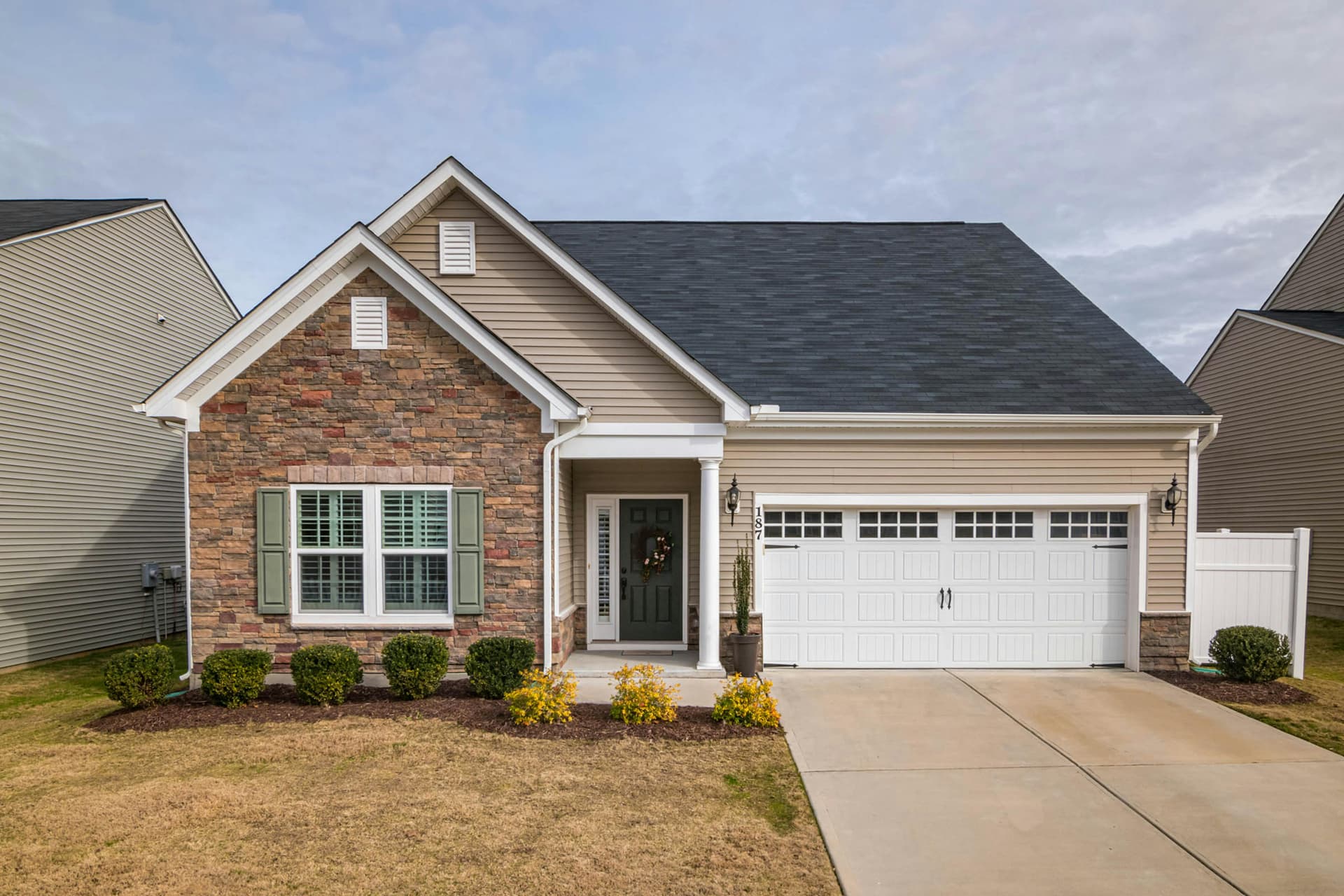

Bakersfield homeowners who bought or refinanced before 2022 are sitting on significant equity and, in many cases, mortgage rates they will never see again. The question is how to access that equity without destroying the financial structure that makes their current situation so valuable.
This is the single most important equity access decision in the current rate environment, and most homeowners make it without understanding the trade-offs. A cash-out refinance at current rates on a home with a 3% first mortgage is one of the most expensive mistakes I see. A HELOC in the right situation is one of the most elegant solutions.
Here is the full comparison.
| Feature | HELOC | Cash-Out Refinance |
|---|---|---|
| Effect on Existing Mortgage | None, second lien, first stays intact | Replaces your first mortgage entirely |
| Rate Type | Variable (tied to prime rate) | Fixed available (30- or 15-year) |
| Closing Costs | $500–$2,500 (often waived) | $3,000–$8,000 (2–3% of loan) |
| Access to Funds | Draw as needed during draw period | Lump sum at closing |
| Monthly Payment | Interest-only option during draw period | Full P&I on new loan balance |
| Rate Level (2026) | ~Prime + 0.5–1% (variable) | Current 30-yr fixed rate |
| Best If You Have a Low Existing Rate | Yes, preserves your low rate | No, you give up your existing rate |
| Best for Large Lump Sum | Possible but variable rate exposure | Yes, fixed rate, predictable cost |
| Tax Deductibility | Interest deductible if used for home improvement | Interest deductible on acquisition portion |
| Repayment Period | 10-year draw, 20-year repayment typically | 15 or 30 years from close |
Why a HELOC Is Often the Right Answer in 2026
If you have a mortgage rate below 5%, a cash-out refinance replaces your cheap first mortgage with a new loan at current rates. On a $300,000 outstanding balance, refinancing from 3.25% to 6.75% costs you roughly $750/month more on the first mortgage alone. That's before you even access the equity.
A HELOC sits behind your existing first mortgage. It doesn't touch the rate or the balance on your first. You borrow only what you need, when you need it, at a rate that's typically prime-plus. In 2026, HELOC rates are floating around 7–9%, which is higher than your first mortgage rate but you're only paying that rate on the equity you actually use.
For home improvements, emergency access, or bridge financing, the HELOC is almost always the superior product for anyone with a sub-5% first mortgage.
When a Cash-Out Refinance Makes More Sense
If your existing rate is already at or above current market rates (typically 2023–2024 vintage loans), a cash-out refinance may make sense because you're not sacrificing a below-market rate. You might actually improve your rate while accessing equity at the same time.
Cash-out also makes sense when you need a large, predictable lump sum with a fixed rate and fixed payment. Home additions, investment property down payments, or debt consolidation with a specific payoff amount are all better served by the certainty of a fixed cash-out structure.
The refinance calculator can help you model the break-even between a cash-out refinance and keeping your existing first mortgage plus adding a HELOC.
Dan's Verdict: Know Your Existing Rate First
Before any equity access conversation, I ask one question: what is your current rate and balance on your first mortgage? The answer determines everything.
Below 5%: HELOC almost certainly wins. We're accessing equity without touching the first mortgage.
5–6.5%: Gray zone. Run both scenarios. The comparison depends on how much equity you're accessing and what you're using it for.
Above 6.5%: Cash-out refinance is worth serious consideration, especially if current rates are competitive with your existing rate or better.
The homeowners who get this wrong are the ones who call a lender and ask for a cash-out refinance without knowing their existing rate matters to the recommendation. Any lender who quotes you a cash-out refi without asking about your existing rate first is not doing their job.

If your existing mortgage rate is below 5%, a HELOC almost always beats a cash-out refinance for equity access. If your rate is above 6.5%, cash-out may make more sense. In between, run both scenarios. Do not refinance a sub-5% first mortgage for equity access without understanding the long-term cost.
Want Dan to compare a HELOC vs. cash-out refinance for your specific situation and existing rate?
Call Dan at (661) 342-9381. He'll run the numbers for your specific scenario in minutes.
People Also Ask
Can I get a HELOC if I already have a low first mortgage rate?
What credit score is needed for a HELOC in California?
Can HELOC payments increase significantly?
How fast can a HELOC close?
Bottom Line
Protect your existing low rate if you have one. Use a HELOC to access equity without touching your first mortgage. Only consider a cash-out refinance if your existing rate is already at or above current market rates, or if you need a large fixed-rate lump sum. Call Dan to run both scenarios with your actual numbers.